
Staffing the Neighbourhood NHS
The neighbourhood model is structurally different from the hospital model. The workforce question is structurally different too.
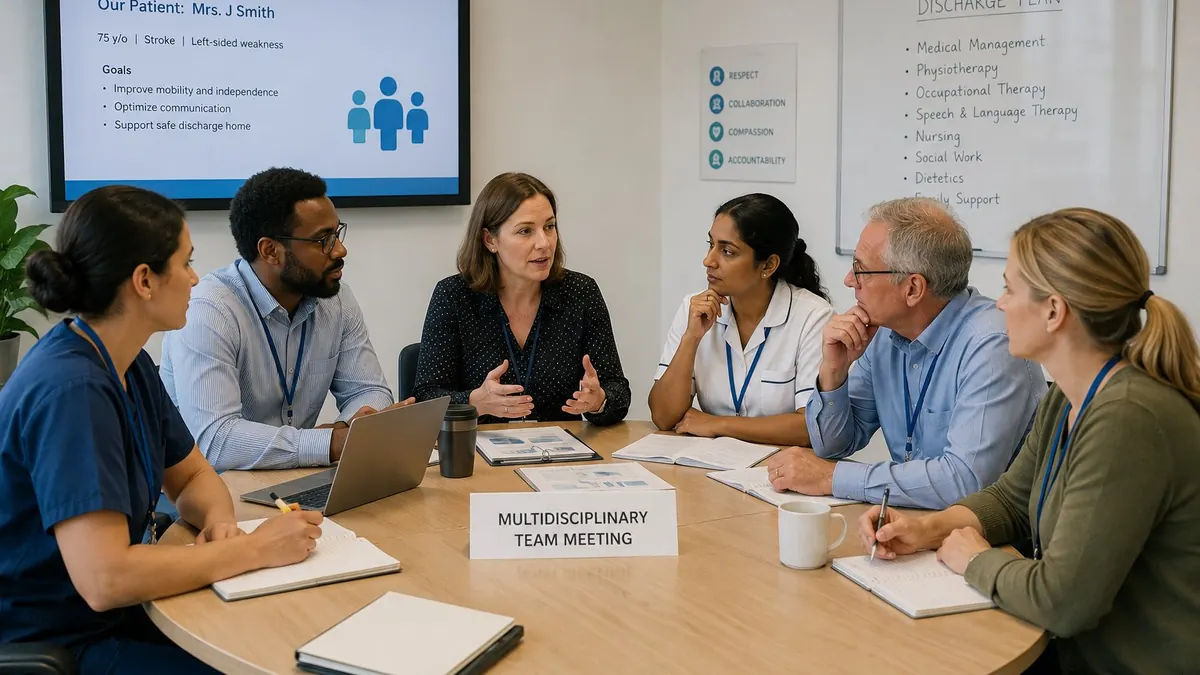
The neighbourhood model is structurally different from the hospital model. The workforce question is structurally different too. Most NHS workforce planning is still being done at the wrong scale, in the wrong shape, for the wrong unit of care.
This is what changes when you take the Neighbourhood Health Framework seriously.
What the framework actually asks for
The Framework specifies six components for a complete neighbourhood team: prevention, primary care, urgent response, transitional care, complex multimorbidity, and proactive population health. Each component requires a different blend of clinical disciplines. Each is shaped around the population, not the institution.
Read in detail, the framework is asking for something the NHS has rarely staffed at scale: integrated multidisciplinary teams operating around populations of 50,000 people, with shared clinical accountability, continuous handover discipline, and outcomes measured at the cohort level. Not at the discharge episode, not at the practice list, not at the speciality level. At the neighbourhood.
This is a different workforce architecture, not the same workforce in a different building.
The workforce gap that already exists
The community workforce was depleted before the framework was published. GP partnerships shrinking, community nursing services hollowed out, paramedics drawn into ambulance services, AHPs concentrated in acute settings. The Long Term Plan made the right strategic call in 2019. The intervening years did not deliver the workforce to back it.
The framework now needs that workforce, at the same time as it needs a fundamental redesign of how the workforce is deployed. ICBs facing this are managing two compounding gaps: not enough people, and not the right configuration of the people they do have.
Substantive over locum, every time
Locum cover has a role. Continuity-first neighbourhood services are not it. The cohort the framework targets, frail older adults, complex multimorbidity, end-of-life patients, are the populations that suffer most from clinical discontinuity. Locum-staffed services churn relationships, lose context, and rebuild trust every shift.
Substantive recruitment, properly supported, costs less over the lifetime of the role than locum cover, retains better, and delivers measurably better continuity. The financial argument is straightforward. The operational argument is stronger. Locum cover is appropriate for capacity flex; substantive employment is the foundation of neighbourhood delivery.
> Kinetic Resource recruits substantively for neighbourhood teams. [Find out more](/resource).
Where the workforce comes from
Three sources, ranked by realistic yield.
**Redeployment.** The workforce already exists, partially, inside the system. Community nurses, AHPs, pharmacists, paramedics, social care professionals, all currently working in configurations that pre-date the neighbourhood model. Redeployment is faster than recruitment, but it requires governance work, contractual work, and supervisory work that ICBs underestimate.
**Recruitment.** Real recruitment, not framework agency churn. Substantive contracts, neighbourhood-specific roles, multidisciplinary onboarding, clinical leadership on the recruitment panel. The market for this workforce is tight but not empty. Clinicians who want to work in community settings, with continuity, in MDT structures, are findable. Recruitment that competes on basis of locum rates will not reach them.
**Retention.** The most overlooked workforce source. Every clinician retained in post for an additional year is a clinician not recruited. Most neighbourhood failure modes start with workforce churn in the first six months of go-live. Retention investment (supervision, professional development, peer support, manageable caseloads) is the single highest-leverage workforce intervention in most systems.
Clinically led, jointly accountable
The capability frame for neighbourhood workforce planning has three properties.
**Clinically led.** The workforce decisions are made by clinicians, not by procurement leads acting on behalf of clinicians. The neighbourhood lead clinician has decision rights on team composition, supervision structure, and cohort allocation.
**Jointly accountable.** Workforce outcomes are shared between the system, the provider, and the workforce partner. Continuity is measured. Retention is measured. The workforce partner is accountable for both, not for placements made.
**Neighbourhood-shaped.** Roles are designed around the cohort, not the institution. Job specifications reflect the population they serve. Supervision structures reflect the team they sit in. Career paths reflect the neighbourhood, not the parent organisation.
When these three properties hold, neighbourhood teams build sustainably. When any of them fails, the team disintegrates in the first 18 months.
The decade ahead
This is the workforce question of the decade. Not because the policy framework demands it, but because the population already does. The NHS that gets built is the one that figures out how to staff this model. The systems that lead will be the ones that take workforce seriously, treat it as architectural, and partner with delivery organisations that can build it alongside them.
Most workforce planning happening in ICBs today is still being done in the shape of the old NHS. The systems that move into the shape of the new NHS first will set the standard for the rest.
*Kinetic Health Partners is part of the ShropDoc Group. We recruit and operate clinical teams for the neighbourhood NHS.* [*Talk to us about your workforce.*](/contact)