Mobilising neighbourhood services
A 90-day playbook for ICBs that want to move first on the Neighbourhood Health Framework. Discovery, workforce, mobilisation, iteration.
The NHS 10 Year Health Plan moves care out of hospitals and into neighbourhoods of around 50,000 people. The policy framework is clear. The workforce question is not. And the gap between policy and operational reality is where most ICBs are quietly stuck.
This is a 90-day playbook for the ICBs that want to move first.
Why the first 90 days matter
The Neighbourhood Health Framework was published with implementation guidance, six service components, and clear expectations. What it did not include was a mobilisation runbook. ICBs are reading the same framework documents, meeting the same provider organisations, and circulating the same workforce concerns.
The systems that move first will lock in the workforce, set the operational precedent, and shape how their region implements the neighbourhood model for the rest of the decade. The systems that wait will recruit into a depleted pool, mobilise against an established benchmark, and end up reactive.
This is not a marathon. It is a sprint, run repeatedly, against a structural deadline.
Days 0 to 30: discovery and design
Three things have to happen in the first month, in parallel.
**Population mapping.** Who actually lives in this 50,000-person neighbourhood? Not the registered list size, but the people who use NHS services most: frail older adults, care home residents, housebound patients, those approaching end of life. The mobilisation builds out from this cohort. Without it, the service is shaped around organisational convenience, not population need.
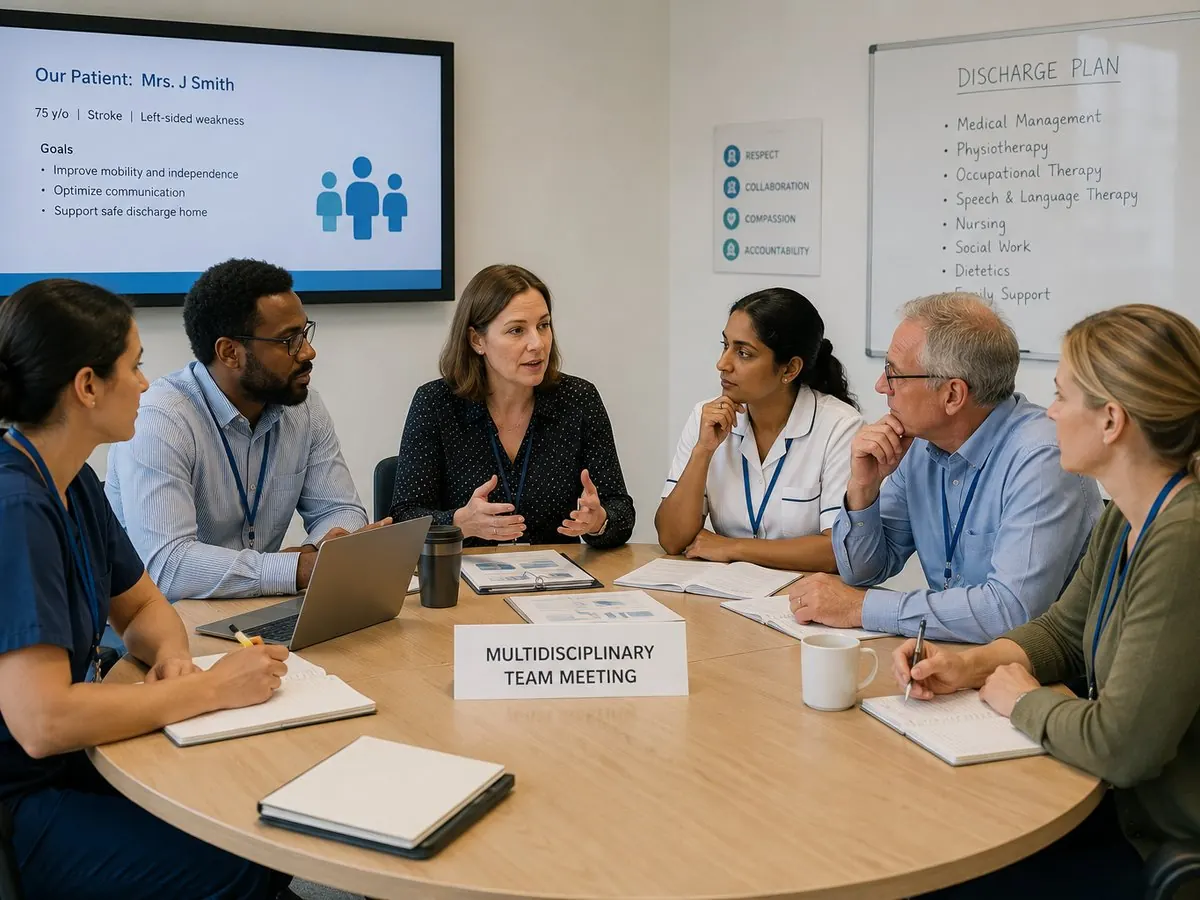
**Workforce baseline.** What clinical workforce already operates in this geography, employed by whom, and on what contractual terms? GPs, community nurses, AHPs, paramedics, social care professionals. Most ICBs do not know the answer to this with any precision. The baseline determines whether the neighbourhood team gets built by recruitment, by redeployment, by joint employment, or by a combination of all three.
**Operating model decision.** Provider-led, system-led, or hybrid. Each has different governance implications, different financial implications, and different recruitment implications. The decision should be made before the workforce conversation starts. Too many ICBs are recruiting before they have decided who employs the people they are recruiting.
Days 31 to 60: workforce and compliance
The middle month is where most mobilisations fall behind. Three failure modes show up here.
First, ICBs underestimate how long it takes to assemble a multidisciplinary team substantively. Locum cover can be stood up in two weeks. A substantive MDT, with the right governance, the right professional registrations, the right line management structures, and the right cohort allocation, takes eight to twelve weeks at minimum. The 30-day window is for kick-off, not completion.
Second, compliance scaffolding is treated as paperwork rather than infrastructure. NHS framework approval, pre-employment governance, professional indemnity, information governance, safeguarding training, the operational policies that need to be in place before a clinician sees a patient. These take time to assemble properly. Trying to compress them in the last fortnight is how mobilisations slip or, worse, go live without the right base.
Third, ICBs try to do everything themselves. Most ICBs do not have an in-house workforce delivery function for community-based MDT working. They have commissioners, they have transformation teams, but they do not have a 30-person operational delivery capability sitting idle. This is where partner organisations come in.
> Kinetic Resource builds substantive neighbourhood teams. [Find out more](/resource).
Days 61 to 90: go-live and iterate
The third month is operational. The team is hired, the policies are signed, the cohort is identified, and the service goes live.
What matters in this window is the iteration discipline. Weekly review meetings between the operational lead, the clinical lead, the commissioning lead, and the workforce partner. What worked, what did not, what needs to change. The first month of operation reveals more than the previous two months of planning. Systems that build iteration into the design adapt faster than systems that build a perfect plan.
Two metrics matter most: continuity of care for the population cohort, and retention of the workforce. Neither shows up in the first 90 days, but both are determined by what happens in them. The handover discipline, the supervision structure, the workforce experience of the first six weeks. These are the foundations.
Three things that go wrong
There are dozens of ways a neighbourhood mobilisation can stall. Three account for most of them.
**Workforce sourced too late.** ICBs leave the workforce conversation to the last month, then discover that the labour market for substantive community-based clinicians is tighter than they thought. Start the workforce conversation in week two, not week ten.
**Governance treated as paperwork.** Mobilisation governance is operational infrastructure. Clinical governance, information governance, financial governance, performance governance. If any of these are still being designed in the last fortnight, the mobilisation is at risk.
**No iteration architecture.** Services that go live without a defined weekly review and adaptation cycle drift in their first 90 operational days. The discipline of "what changed and why" is what turns a launched service into a sustainable one.
Mobilisation is a discipline
The systems that make neighbourhood health work are not the ones with the most resources. They are the ones with the most discipline. A clear 90-day cadence, an honest baseline, a real workforce partner, and an iteration architecture that survives the first 90 days of operation.
Most ICBs are 90 days behind where they should be. The next 90 days decide who catches up.
*Kinetic Health Partners is part of the ShropDoc Group. We mobilise NHS neighbourhood services through joint venture delivery, and we recruit substantively for the systems that mobilise them themselves.* [*Talk to us about your mobilisation.*](/contact)